
Planning a family holiday as a single parent involves enough moving parts without adding a wheelchair to the equation: the accommodation, the journey, the activities, and the children who want to do everything at once. When mobility equipment is part of the picture, every one of those decisions has an extra layer underneath it. Often, getting to and around at your holiday destination is where that extra layer is most felt. Getting the transport right does not just solve the journey – it determines whether the whole trip actually works. Read on to find out more:
Choosing the Right Vehicle for Accessible Family Holidays
Whether you need to get to the airport or travelling the entire route to your holiday accommodation by car, a standard hire car fails in predictable ways. Not only is there never enough boot space when you are travelling with mobility equipment, transfers are also physically demanding and time-consuming, especially when managing children and luggage simultaneously without another adult to help. Long journeys in a hire car are uncomfortable without the right setup, and uncomfortable journeys set the tone for everything that follows.
For a single parent managing the entire trip alone, wheelchair accessible vehicles built for everyday family travel can change what the journey feels like in practice. Lowered floors, ramps or lifts, specialist securing systems, flexible seating, and enough room for luggage all matter once the journey involves children, bags, stops, and a wheelchair user. Best of all, the wheelchair stays stable during travel, so the boarding and exit sequence becomes manageable rather than a production.
Families comparing wheelchair accessible vehicles (“WAVs”) for sale need to look beyond vehicle size. Layout, ramp angle, seating positions, luggage space, and the restraint system all matter when the same vehicle has to work for accessible family holidays as well as daily use. Here are some things to look out for when looking to buy or hire a wheelchair accessible vehicle:
Rear-Entry Versus Side-Entry Configurations
WAVs come in two main layouts and the choice between them matters more on accessible family holidays than it does for a local school run:
Rear-entry vehicles have a ramp at the back. They work well in car parks and on narrow streets where side clearance is limited. The wheelchair user travels facing backwards which suits some families and not others depending on comfort, age of the child and journey length.
Side-entry vehicles ramp from the passenger side. The wheelchair user sits alongside other passengers which most families find more natural. Kerb access is easier in town centres, tourist drop-off points, and areas where Blue Badge parking is available close to entrances. For a single parent with two children to manage, the more flexible seating arrangement that side-entry models typically offer is very much worth considering.
Boot space for luggage sits differently across the two configurations: Rear-entry models frequently provide more of it. Side-entry models trade some of that for passenger flexibility. Neither is universally better. The right answer depends on the children, the specific wheelchair, and the single parent holidays being planned.
Specialist providers offer home demonstrations before purchase or hire. Testing the actual vehicle with the actual wheelchair, the actual luggage, and the children present is considerably more useful than reading specifications.
What to Test During a Vehicle Trial
Ramp and lift operation should be straightforward to deploy and stow without requiring significant force. A single parent will be doing this alone, repeatedly, across every stop of every day. Mechanisms that are awkward in a car park in good weather can become genuinely difficult at a motorway service station in the rain.
The wheelchair securing process needs to be tested fully, not just observed. Every anchor point should be accessible without awkward movements, and wheelchair restraint systems need to feel simple enough to use properly at every stop. Difficult restraint systems lead to rushed shortcuts. Rushed shortcuts on restraints are a safety problem.
Child seat compatibility is the detail that catches families out most often. WAV conversions move seats to accommodate wheelchair space and often use folding or removable seats rather than fixed ones. Testing each seating position with the actual car seats confirms that belts and ISOFIX points are present and functional. This is not something you would want to discover at the start of a long drive!
Safety Standards Worth Knowing
PAS 2012 is the British standard for WAV conversions. Vehicle Type Approval confirms the vehicle meets safety requirements as a complete unit. WTORS, aligned with ISO 10542, covers the wheelchair restraint systems specifically. These are not bureaucratic details. They confirm the vehicle has been crash-tested and that the conversion meets structural integrity requirements.
Ask for documentation confirming which standards apply before hiring or buying any vehicle. A personal wheelchair should carry ISO 7176-19 certification confirming it has been crash-tested for use as a vehicle seat. Not all chairs meet this standard which is worth checking before booking or buying anything.
Breakdown cover needs reviewing specifically for adapted vehicles. Standard policies do not always extend to WAV-specific features. Confirming coverage before departure avoids a difficult situation mid-trip when there is no other adult to manage the children while dealing with a breakdown.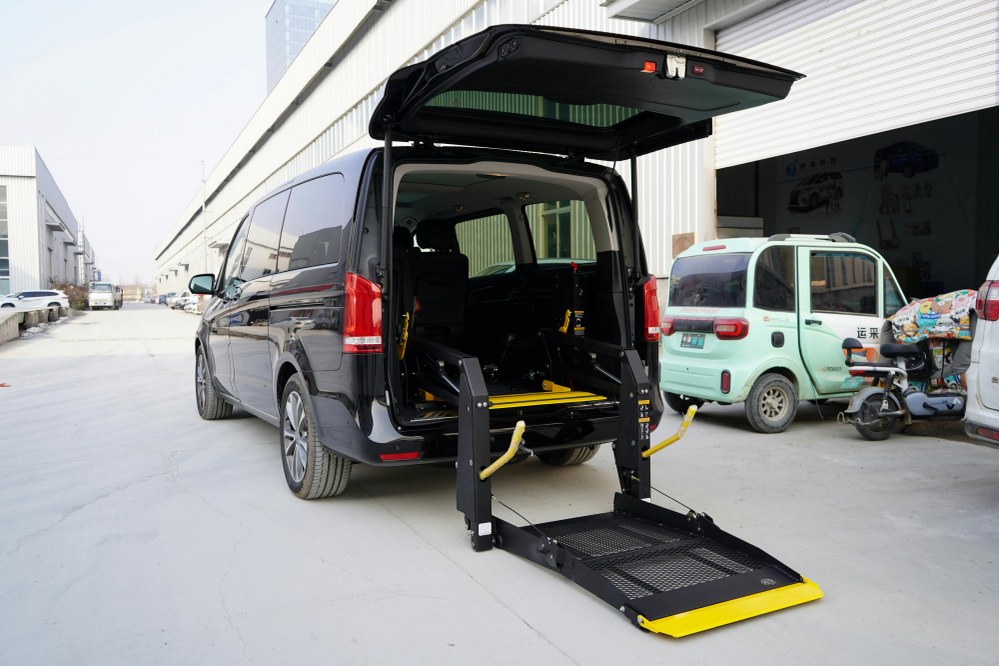
The Motability Scheme
For single parents on a tighter budget, this scheme is worth investigating. Eligible recipients can use their mobility allowance to lease a vehicle with insurance and servicing included. For families where the standard purchase or hire car route involves significant additional cost for an adapted vehicle, this is a route worth understanding before booking.
Insurance for Wheelchair Adapted Vehicles
Insurance for adapted hire vehicles sometimes requires specialist cover. Some providers include this automatically, others do not. Checking before departure takes ten minutes. Not checking can turn a minor incident into a significant financial problem.
Practical Holiday Planning Tips
A parent who knows that transport is sorted can focus on the trip itself rather than running logistics calculations at every stop. So here are some tips for accessible family holidays:
- Route planning: Check accessible rest stops on motorway routes, parking availability at your accommodation, congestion zone restrictions in city centres, and charging points for electric WAVs before departure. Such things are considerably less stressful to investigate or solve at a desk from home than in a car park at six in the evening.
- Flying with a child in a wheelchair: Check the wheelchair’s dimensions to see if your airline is able to carry it before booking your tickets. You will also need to notify the airline in good time before travel that you are bringing a wheelchair. At this point you can also discuss whether the wheelchair needs to be checked in and how you will get around the terminal, board the plane, and disembark at the other end.
- Roads and parking: Many areas in the UK such as Cornwall can present narrow lanes, a shortage of parking, and peak season congestion. A compact side-entry WAV typically handles this environment better than a larger rear-entry model, especially when disabled parking near busy tourist spots is limited. Getting a large vehicle into a Cornish car park in August is a specific kind of stress that a smaller footprint avoids.
- Varying terrain: The Lake District and the Yorkshire Dales involve hilly terrain and steep gradients. Testing the ramp on similar gradients before the trip will confirm whether or not deployment works on a slope. Confirming the braking system holds on hill starts is not excessive caution. It’s the checks that prevent a bad moment from becoming a dangerous one.
- Touristy areas: Edinburgh and Bath both have congestion considerations, limited access hours in historic areas, and cobbled streets that require careful navigation. Local authority websites will show you the current access rules. Mapping drop-off points close to main attractions in advance turns what could be a frustrating arrival into a straightforward one.

Peace of Mind
Accessible single parent holidays require more planning because the margin for error is smaller. There is no second adult to manage a difficult moment while the other one solves the problem. Getting the transport right removes the single biggest variable on an accessible family holiday. With the right wheelchair accessible vehicle, everything else becomes easier to handle. Even the days that go sideways because you feel confident that you can manage any obstacle that an accessible family holiday can throw in your path single handedly!