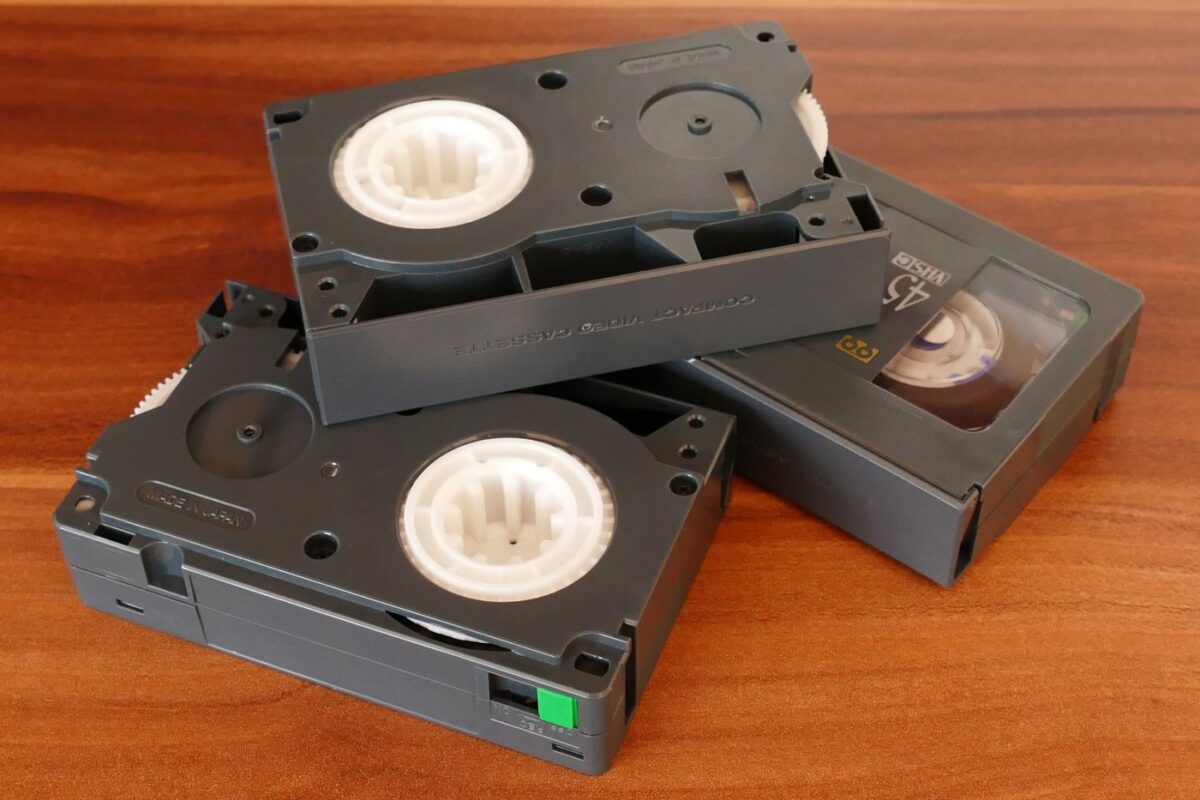
Old holiday videos capture something photographs often miss. They keep alive not only the trips but also the people involved and the places visited, as well as unexpected little instances of their lives that would be forgotten after years. If you have such videos recorded on VHS tapes, you might wonder how to watch them as very few of us own VCR players nowadays.
So, what are your options? Read on to find out the best ways to watch videotapes, from using a VCR player that will be able to reproduce the original tape to an analogue-to-HDMI converter that will help to connect old equipment to a modern TV.
Watching VHS Tapes With a VCR
If you still have a working VCR, playing an old travel recording is relatively simple. Many VCRs use composite connections with three plugs:
- Yellow for video
- White for left audio
- Red for right audio
Connect these to the matching inputs on your television, select the appropriate AV input, and insert the cassette. Some older VCRs use SCART connections instead, particularly in the UK and Europe. The connections available on your television will determine whether you can connect the equipment directly.
For someone with only a few tapes, this may be all that is needed.
How to Connect a VCR to a Modern TV
Televisions these days utilize HDMI connections, whereas VCRs tend to produce analogue signals. If there are no compatible AV ports on your television, then you will need an analogue-to-HDMI converter. The setup is usually VCR → analogue cables → converter → HDMI cable → TV.
The converter allows the television to display the VCR’s signal through an HDMI input. It does not, however, turn VHS footage into genuine high-definition video.
Old holiday recordings may still look soft or show picture noise, tracking issues, or colour changes. These characteristics come from the original recording and cannot simply be removed by changing the connection.
Checking Your VHS Tape Before Playing It
If a cassette has been stored for years, inspect it before putting it into a VCR. Avoid playing a tape with obvious physical damage or visible mould. A damaged cassette may not play properly and could cause problems with the VCR. This is particularly important when the recording contains irreplaceable travel memories. While you might be able to upgrade your playback machine, there is no way you can re-record the images captured on holiday many years ago. Should the tape look like it might have been contaminated, it would be safer to get an expert evaluation done before anything else.
Can You Watch VHS Without a VCR?
The simple answer is “no”. The VHS tape requires a playback device that is capable of reading the data from the tape. A smart TV, laptop, USB flash drive, or HDMI cable is incapable of doing that.
You can, however, use a VCR to transfer the recording to a computer through a video capture device. The basic setup is VHS tape → VCR → video capture device → computer. The input device gets the video and audio signals and enables appropriate software to record the video footage in digital form. This is a feasible method provided you have only a few videos and are capable enough to configure the device.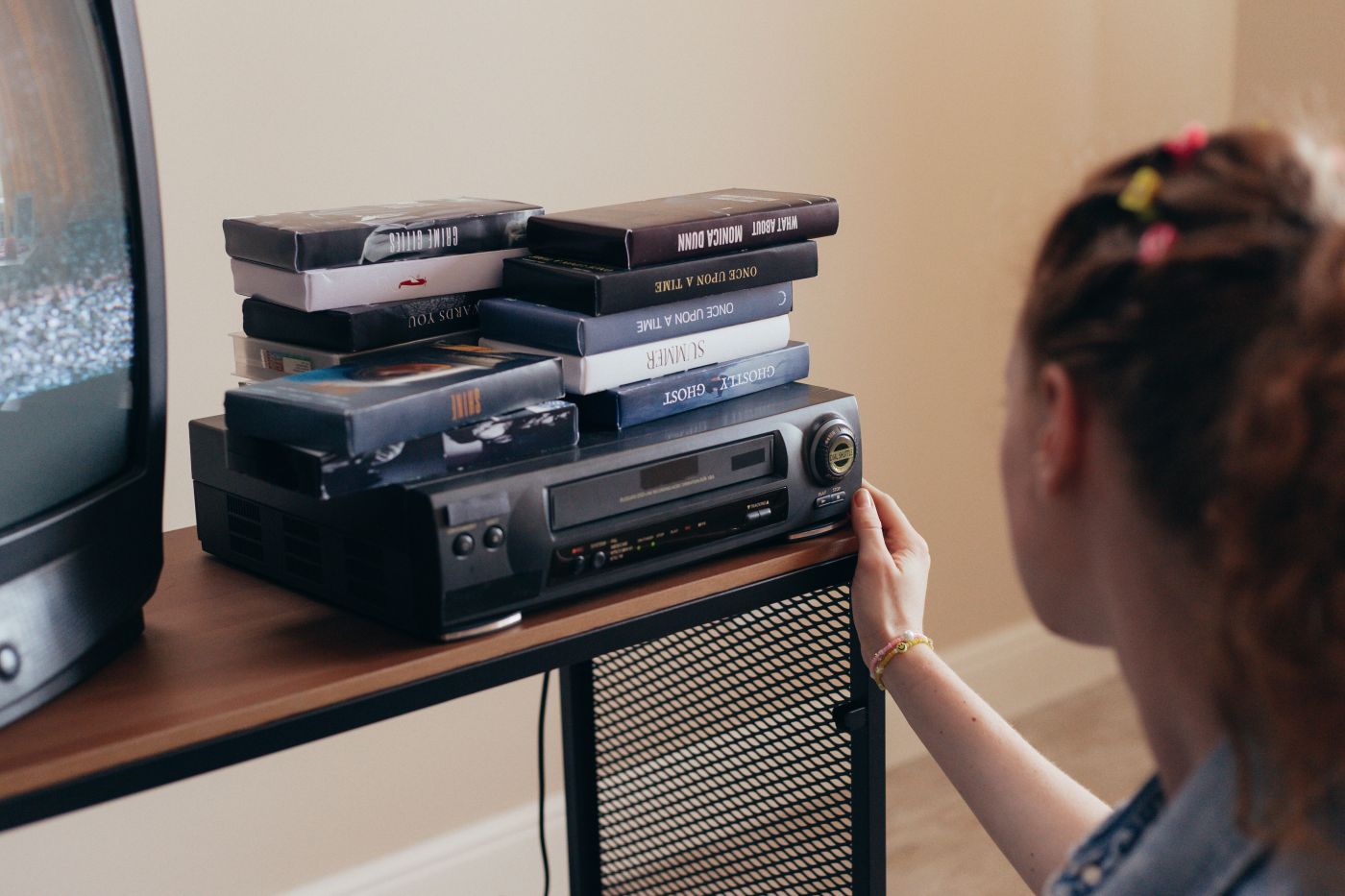
When to Consider Digitizing Old Travel Videos
If you only have a few tapes, connecting a VCR whenever you want to watch travel memories may not be much of a problem. With a larger collection, it quickly becomes less convenient.
Digital documents are simpler to sort and retrieve. The recordings can be grouped together in appropriate storage places, duplicated for backup, and it’s much easier to share your travel adventures with families and friends. The files can also be organized according to destination, year, or events, thus allowing you to easily locate a specific recording when required.
If you want to keep old travel films easily accessible and original tapes become hard to play, preserving old video recordings is necessary.
Digital Files or DVD: Which Is Better?
DVD was once a common way to store converted VHS recordings, but digital files are generally more flexible for modern use.
| Feature | Digital File | DVD |
| Computer viewing | Easy | Requires a suitable drive |
| Phone or tablet | More convenient | Requires an external DVD drive |
| Sharing | Easy | Requires a DVD burner |
| Editing | Straightforward | Less convenient |
| Backup | Easy to create | More limited |
| Modern TV | Compatible devices can play files | Requires a DVD player |
A DVD can prove helpful only if you have an interest in acquiring a physical version. Digital copies allow for more versatility.
Will Converting VHS Improve the Picture?
The process of digitization will not upgrade the VHS recording to a high-definition video. The quality of your holiday videos will depend on the original tape, the VCR, and the process of transferring. Issues present in the original recording, including softness, colour shift, tracking issues, or video noise, will still be there after the conversion.
The main advantage of converting the VHS tapes into digital files is increased access to them. You will no longer need the old VCR to play the recording.
Frequently Asked Questions
Is it possible to view VHS tapes on a smart TV?
In case the TV supports only HDMI connections, you can do so only with an analogue-to-HDMI converter.
Can I view VHS tapes on my laptop?
Yes, but the VCR will need to be connected to the laptop using a video capture device.
Can VHS tapes be played from a USB stick?
No, the recording needs to be transferred to a digital video file.
Is it worthwhile converting holiday VHS tapes?
If these tapes contain valuable moments, then converting them is a good idea both to preserve your holiday memories for future generations and because viewing them will become much more convenient.
Should I keep my original VHS tape after converting it to digital?
It makes sense to retain your original tape for valuable recordings if you have a VCR so convenient access.
Does VHS-to-digital conversion make the video HD?
No. Conversion changes the recording format but cannot create detail that was not present on the original VHS tape.

Bringing Old Travel Memories Back to the Screen
A VCR that works is the easiest method for watching a VHS tape, provided that the appropriate equipment is already available. If you have a modern TV, you might also need an analogue-to-HDMI converter. For multiple holiday and travel recordings, digitization might be the best solution. It allows you to organize the footage, create backups, and watch compatible files without depending on an aging VCR every time.
Remember to always check if the tape and the VCR are functioning properly to ensure that you do not lose precious memories of your family holidays, people, and places you might never visit again.